Table Of Content

Over water, the Tomahawk uses inertial guidance or GPS to follow a preset course; once over land, the missile's guidance system is aided by terrain contour matching (TERCOM). Terminal guidance is provided by the Digital Scene Matching Area Correlation (DSMAC) system or GPS, producing a claimed circular error probable of about 10 meters. Cruise missiles remain within the atmosphere for the duration of their flight and can fly as low as a few meters off the ground. Flying low to the surface of the earth expends more fuel but makes a cruise missile very difficult to detect. Ballistic missiles are powered initially by a rocket or series of rockets in stages, but then follow an unpowered trajectory that arches upwards before descending to reach its intended target.
T-38 Talon: a chapter that closes in the history of military aviation
Raytheon was awarded a $346m production contract for 473 Tomahawk Block IV cruise missiles in March 2006. The contract includes 65 submarine torpedo tube-launched missiles for the Royal Navy. The war in Ukraine has also seen the use of two European cruise missiles, the U.K.’s Storm Shadow and the French SCALP missile. The two are essentially the same, with a 340-mile range and 990-pound warhead. The missiles donated to Ukraine are launched from specially modified Su-24 Soviet-era strike jets.
Precision Strikes Defined
Called V-1s, after Vergeltung, the [German word for retribution, they were fired from sites in northern France and aimed at London. The idea behind the V-1, which is the core idea behind all cruise missiles since, is to attack from far away without needing a pilot to control it. The Tomahawk (/ˈtɒməhɔːk/) Land Attack Missile (TLAM) is a long-range, all-weather, jet-powered, subsonic cruise missile that is primarily used by the United States Navy and Royal Navy in ship and submarine-based land-attack operations. Cruise missiles are typically armed with conventional or nuclear warheads, but can also be equipped with chemical or biological warheads.
Efficiency in modern warfare
During the flight the missile will verify that the images that it has stored correlates with the image it sees below itself. Based on comparison results the missile's inertial navigation system is updated and the missile corrects its course. The missile continues to ascend toward the highest point in its trajectory, and then begins to descend toward Earth. This is the longest phase of a missile’s flight; for ICBMs, it can last around 20 minutes. During midcourse phase, ICBMs can travel around 24,000 kilometers per hour (15,000 miles per hour).
What Iran's attack on Israel revealed about its weapons arsenal - The Washington Post
What Iran's attack on Israel revealed about its weapons arsenal.
Posted: Wed, 17 Apr 2024 21:58:00 GMT [source]
The Federation of American Scientists says that a ballistic weapon follows a ballistic path for most of its flight. That means once the rocket’s fuel is gone, it will keep moving, just like a bullet does after being shot out of a gun. The Tomahawk is a long-range, unmanned weapon with an accuracy of about 5 metres (16 feet). The 5.6-metre- (18.4-foot-) long missile has a range of up to approximately 2,400 km (about 1,500 miles) and can travel as fast as 885 km (550 miles) per hour. The slow, stubby-winged cruise missile has become a major part of modern warfare. Boost Phase begins at launch and lasts until the rocket engine(s) stops firing and the missile begins unpowered flight.
Part of any missile defense system is the sensors, like specially focused radar, that can detect incoming attacks, and then track those weapons as they travel. These radars then send that tracking information to interceptors, which are missiles launched to fly and destroy the incoming attacking missile. Shooting missiles at other missiles is a hard problem because an incoming threat arrives at great speed, and because the cost calculus can favor an attacker.
As a bridge to the fielding of the NGLAW, the Tomahawk itself reentered production in 2020 to support the improved Block V variant. The Maritime Strike Tomahawk, which integrates a new seeker, is scheduled to enter service in 2023. As recently as December 2018, senior defense officials viewed scramjet propulsion as less mature than rocket-boosted hypersonic gliders. But Taiwan can win, according to the Center for Strategic and International Studies in Washington, D.C. CSIS recently ran a series of war games simulating a Chinese invasion of Taiwan in 2026 and varying degrees of U.S. and Japanese intervention. “In most scenarios, the United States/Taiwan/Japan defeated a conventional amphibious invasion by China and maintained an autonomous Taiwan,” CSIS analysts Mark Cancian, Matthew Cancian and Eric Heginbotham explained in their summary of the war games.
North Korea says it tested ‘super-large’ cruise missile warhead and new anti-aircraft missile
The final limitation was that Tomahawk cruise missiles cannot attack moving targets because they are guided to a position rather than to a specific target. Similarly, a Tomahawk cruise missile could not attack relocatable, that is mobile, targets because these may move while the mission is being planned or during the flight of the cruise missile. A subsonic cruise missile flying a straight flight path and unable to take evasive action would prove easy meat to any enemy interceptor that happened upon it. The first modern cruise missile, the American-made Tomahawk, was designed to fly low, less than 100 meters above the ground. This limited the range at which ground-based radars could detect a cruise missile, as radar waves conform to the curvature of Earth.
Fact Sheet: Ballistic vs. Cruise Missiles
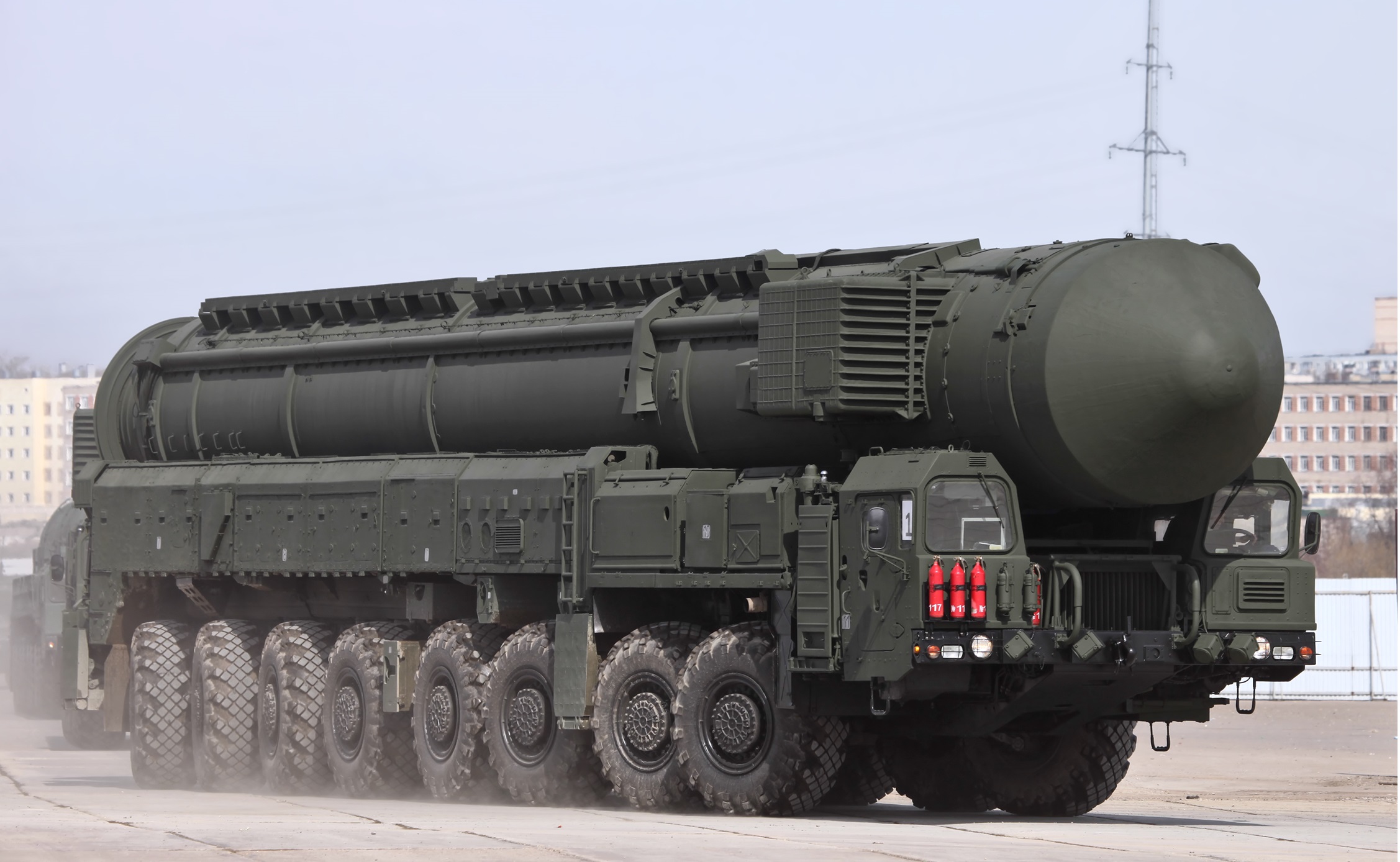
When you hear about hundreds of cruise missiles being fired at targets, they are almost always Tomahawk cruise missiles launched from destroyers. The North Korean regime successfully tested intercontinental ballistic missiles (ICBM) in July and November 2017. Its Hwasong-15 ICBM reached an altitude of 2,780 miles (4,475 kilometers) and flew about 590 miles (1,000 kilometers) before landing in the sea off the coast of Japan. Analysts estimate the Hwasong-15 has a potential range of 8,100 miles (13,000 kilometers).
The launch took place when Japanese Prime Minister Shinzo Abe was on a state visit to the United States. There have been many more test launches of ballistic missiles by North Korea since. Between May and October 2019, North Korea launched as many as 12 ballistic missiles or other projectiles. A hypersonic cruise missile travels at least five times the speed of sound (Mach 5). Analysts say anti-aircraft missile technology is an area where North Korea could benefit from its deepening military cooperation with Russia, as the two countries align in the face of their separate, intensifying confrontations with the U.S. The United States and South Korea have accused North Korea of providing artillery shells and other equipment to Russia to help extend its warfighting in Ukraine.
Although the concept was proven sound and the 500-megawatt engine finished a successful test run in 1961, no airworthy device was ever completed. Cruise missiles are among a growing collection of North Korean weapons designed to overwhelm regional missile defenses. They supplement the North’s vast lineup of ballistic missiles, including intercontinental ballistic missiles aimed at the continental United States. Cruise missiles are among a growing collection of North Korean weapons designed to overwhelm regional missile defenses.
US Navy launch platforms were modified to accommodate upgraded Tomahawk missile variants. Four Ohio class nuclear ballistic missile submarines were converted into cruise missile submarines for firing Tomahawk missiles. The Virginia class submarines and the Royal Navy Astute class submarines were also fitted with new vertical launch modules for Tomahawk missile.
Cruise missiles can strike designated targets with unparalleled precision by leveraging specific coordinates, augmenting their role in modern warfare. Cruise missiles harness a repertoire of guidance methods to ensure the impeccable placement of their payloads on intended targets while outmaneuvering missile defense systems. Among these methods, inertial guidance stands as a foundational approach, relying on a pre-programmed flight path set before launch.
This gives them the option to manually guide the missile to its target or to abort the strike. The German V-1 missile used in World War II was a precursor of the cruise missile, which was developed by the United States and the Soviet Union in the 1960s and ’70s. Capable of carrying either a nuclear or a conventional warhead, the cruise missile was designed to have a very low radar cross section and to hug the ground while traveling at a relatively slow speed to its target. All cruise missiles have an internal guidance system, though the types vary. Navy has deployed since 1984, uses a system called “Terrain Contour Matching,” where an altimeter and an inertia detector plot the flight path against a pre-loaded terrain contour map. Later versions of the Tomahawk also use GPS, and there are other guidance systems that some cruise missiles use.


No comments:
Post a Comment